
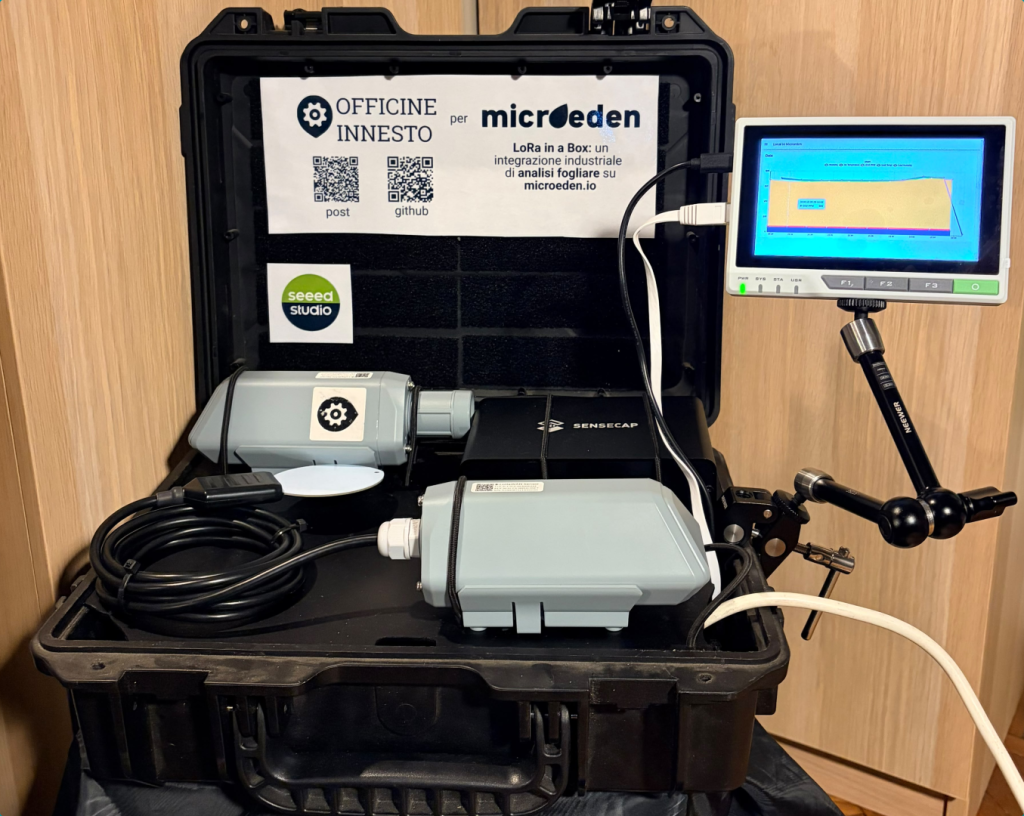
I’ve just finished documenting a little project that answers several of my needs, interests and, in some way, destinies: on one hand, the age-old search for new free Clouds. Microeden is one, but it’s much more than that, and I tried to bring it into the classroom (right now the annual IoT course at ITS ICT in Turin is underway). On the other, the by-now pressing need to integrate professional, certified and resilient sensors. Over the years I’ve tried lots of products and played a lot with LoRa, appreciating the ever more strongly felt need to be in control of your own data.
My long relationship with Agrotech, from DIY to integration
I remember, in those early years of the RuralHack workshops, a huge curiosity in listening to the farmers’ questions, and also their vaguely cruel, and partly justified, way of dismissing technology as an unnecessary or inadequate answer to certain issues.
Or, on the contrary, of being overly enthusiastic about it, placing enormous expectations and optimism in it. Apocalyptic and integrated, they too, back then. Let alone now.
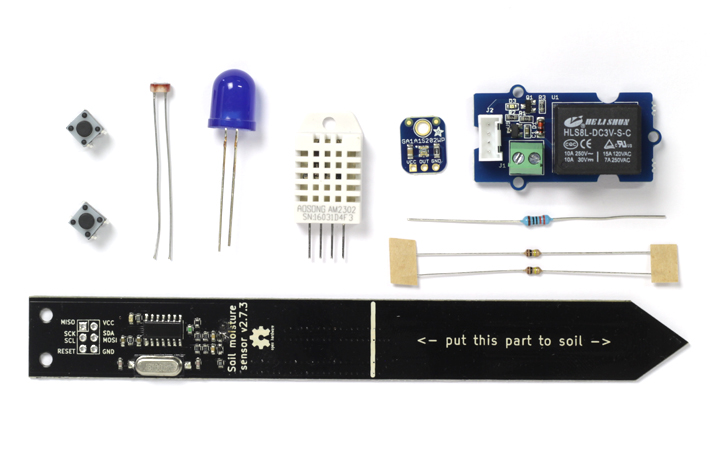
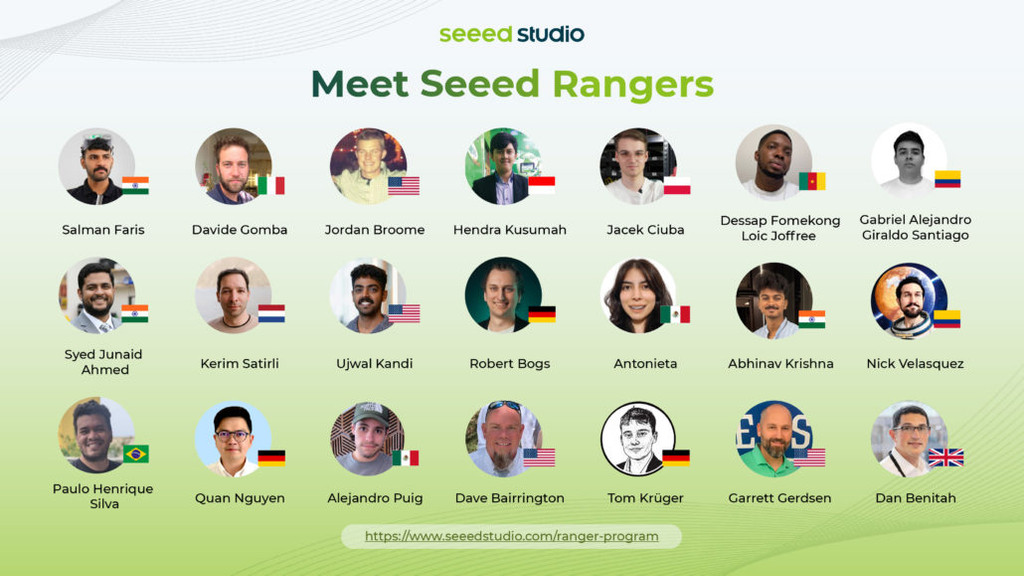
Then came a period of study, strongly shaped by my relationship with Seeed Studio: first with Seeed’s Industrial Application Group (industrial stuff only, no maker) during the final phase of COVID in Europe, then as a collaborator on the first Hazard Response Mission Pack (essentially a spin-off of it focused on natural emergencies), and later as a Ranger, getting to know so many people from all over the world, who brought very different and interesting problems.
The project for Microeden’s stand at Maker Faire Rome 2026
How is this project connected to all of this? I had the pleasure of meeting Microeden, and knowing they would be at Maker Faire Rome 2026, I decided to create a reusable lesson: a sort of adaptation of hardware I had at home to the hypothetical needs and problems of Italian vineyards, with a “smart” leaf (though the smartness still has to come from the agronomist — we just provide some extra data :).
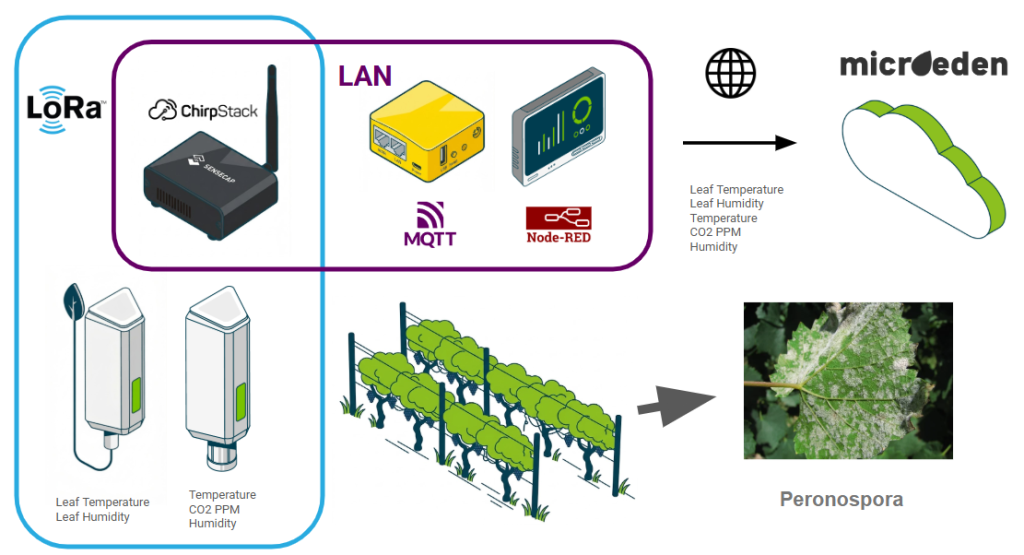
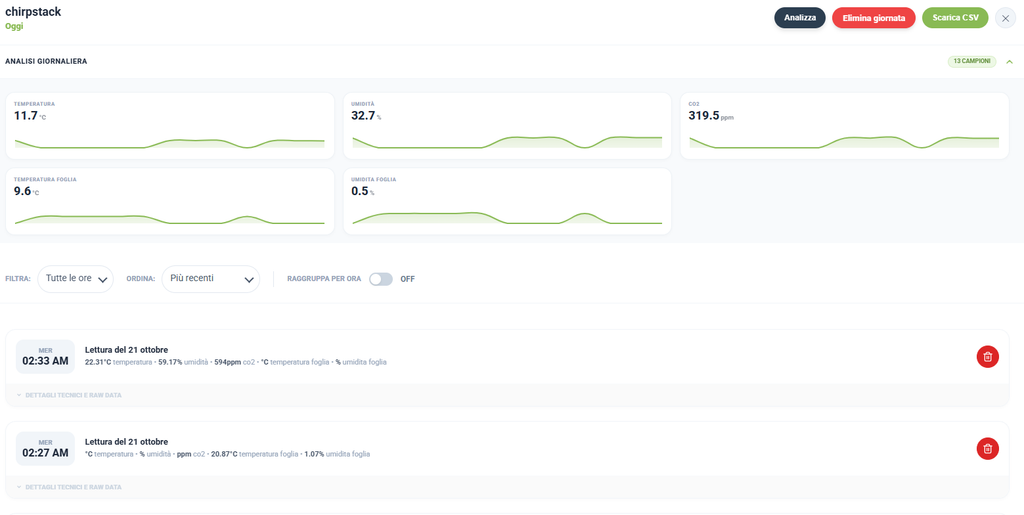
What’s going on here? To understand it better (the documentation may also change), you can read the whole story of how to build this system here on GitHub, but in short we’re using a set of resilient, private technologies that let us read some data from a vineyard, or from any plant. The most exotic sensor, the leaf wetness sensor, can provide wetness periods, i.e. when the leaf starts and stops being wet; the duration of each period; the average temperature while the leaf is wet; and wetness degree-hours, i.e. temperature summed over the hours of wetness. It’s a single index combining “how long” and “how warm”, useful for comparing against risk thresholds.
Everything is collected by a SenseCAP M1 (a router I’m particularly fond of) running ChirpStack, an open-source LoRa Application Server developed by Orne Brocaar, which you can sponsor here. The data is then sent to and displayed on a reTerminal (an industrial Raspberry Pi with a touchscreen), which forwards it to Microeden.
If you want to replicate this project, follow the project’s GitHub 😉