
The home has been by far the place where more IoT devices, solutions and conversations have developed in the last decades- Also the place where the higher number of crowd-funding campaigns and debates on ownership happened (Radicalized, Doctorow, 2019), let alone security aspects of the topic.
We have been seeing and growing Domotics and conversations in the home environment, and kept on updating this syllabus of contents.
We addressed and faced many topics in the years: Voice as a Design tool, Design Fictional objects and Storytelling, the Right to Repair and the obsolescence We witnessed the rise of Home Assistant, the beginning of the ESP8266 heavy use in domotics, along with Arduino itself. The snips.ai Saga and the “Dolphin Attacks” one. Smart Mirrors. The pivotal change in the concept of ownership around the IoT devices-
An ongoing syllabus on Home IoT
It’s obvously hard to draw a line around the boundaries inwhich we think of our house as a bot, a personality. Would a house of a single person in his early 30ies would behave or be run differently compairing to the one of one of an older couple? With these big questions in mind, we designed a series of workshop around the topic of Conversations in the Home.
Learn how to design Custom Devices creating new conversations in your Home, using Mqtt, Arduino, ESPHome, Raspberry Pi ,Home Assistant and several other open source tools to adapt to your need. This course is the updated outcome of what’s been tested for many years in in Casa Jasmina, and will give you the ideal know-now on how to develop an interactive object based in a home scenario.
What if all the devices in your house could connect to the Internet? And what if those devices could all communicate, send you information, and take your commands? It’s not science fiction; it’s the Internet of Things (IoT), and it’s a key component of home automation and smart homes. Within a 4-afternoon workshop you will be able to automate your house only using a Arduino/Raspberry Pi and Home Assistant, an open source tool to manage IoT devices. You will also be given a spread knowledge of the state of the art of Home Automation and DIY technologies.
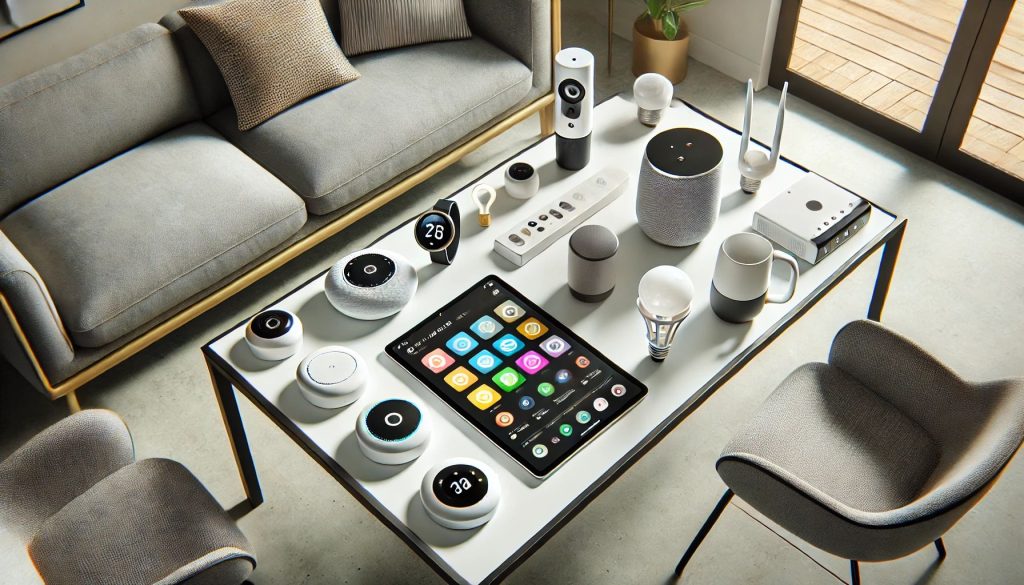
Creational Hacking Tools
- Laptop
- Wemos D1 / MKR1010 / Wio Terminal
- Wemos DHT Module and Relay Module, or similar
- Raspberry Pi 4
- Micro SD card
- A Wifi Router
- (Optional) Home Assistant installed
- (Optional) Node-RED Installed
- (Optional) Alexa or Google Home
- (Optional) Philips Hue
Are you interested in an online of onlife workshop about Home Conversations? Ping Us!