Aquaponics and Self Production
IoT, STEAM, gamification, open source
The teaching of natural sciences is fundamental to science and environmental education of students in various school tracks, from elementary through high school, and even in specific post-high school grades. A course addressing the creation of a greenhouse for independent food production of food and plants
Teaching Units and Possibilities
- Costruzione della Serra Acquaponica Didattica
- Introduzione all’IoT attraverso l’uso della Serra
- Manutenzione e Gamification del progetto: il ciclo dell’acqua, il primo pesce, la crescita delle piante e delle prime verdure (formazione in loco e presa in carico online)
- Experience Showcase: the greenhouse is shown at an event and explains the possibilities of this incredible teaching tool
Our proposal is to teaching natural sciences throght the development and the mantainance of a modular aquaponic greenhouse.
But what is an aquaponic greenhouse and how can it become a valuable teaching tool?
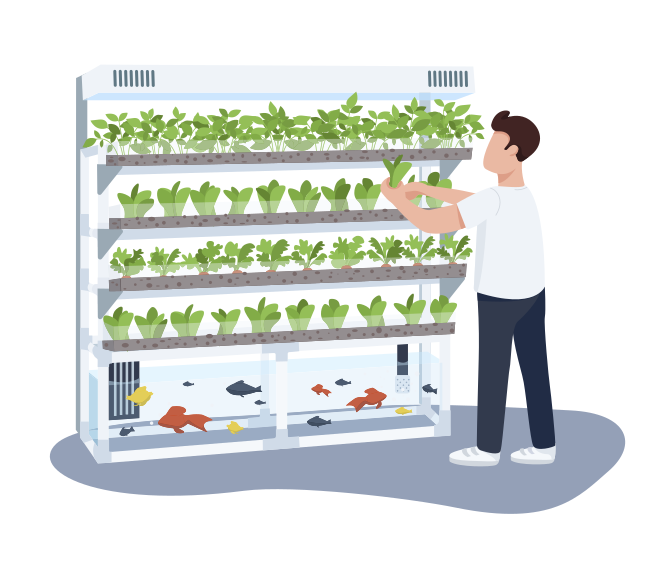
An aquaponics greenhouse is an integrated cultivation system that uses water as the main growth factor for plants and fish.
In practice, it is a closed system in which plants grown in water absorb nutrients produced by fish, which in turn feed on the plants themselves.
A virtuous circle in which no pesticides or chemical fertilisers are used.
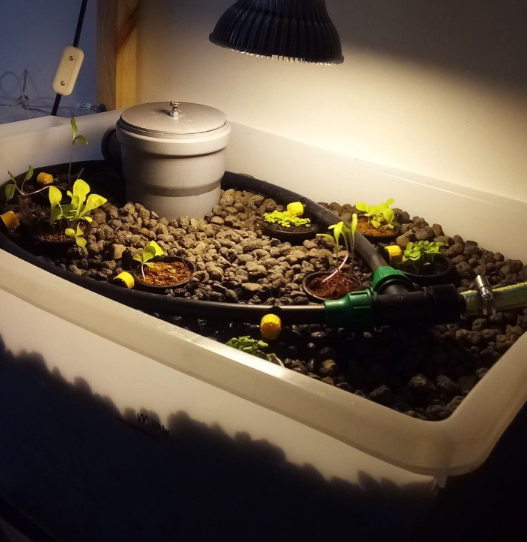

Teaching how an aquaponic greenhouse works and how plants and fish can be cultivated in a sustainable way is a unique educational experience that offers numerous benefits. Firstly, students learn about the delicate balance between living organisms and the natural environment, learning the importance of preserving natural resources and seeking sustainable solutions for food production.
Secondly, aquaponic greenhouse cultivation offers an incredible opportunity for interdisciplinary learning. Indeed, teachers can integrate the concepts of biology, chemistry, physics, mathematics and technology into their lessons, providing students with a more complete understanding of the natural world.
But lessons in the aquaponics greenhouse are not just theory.
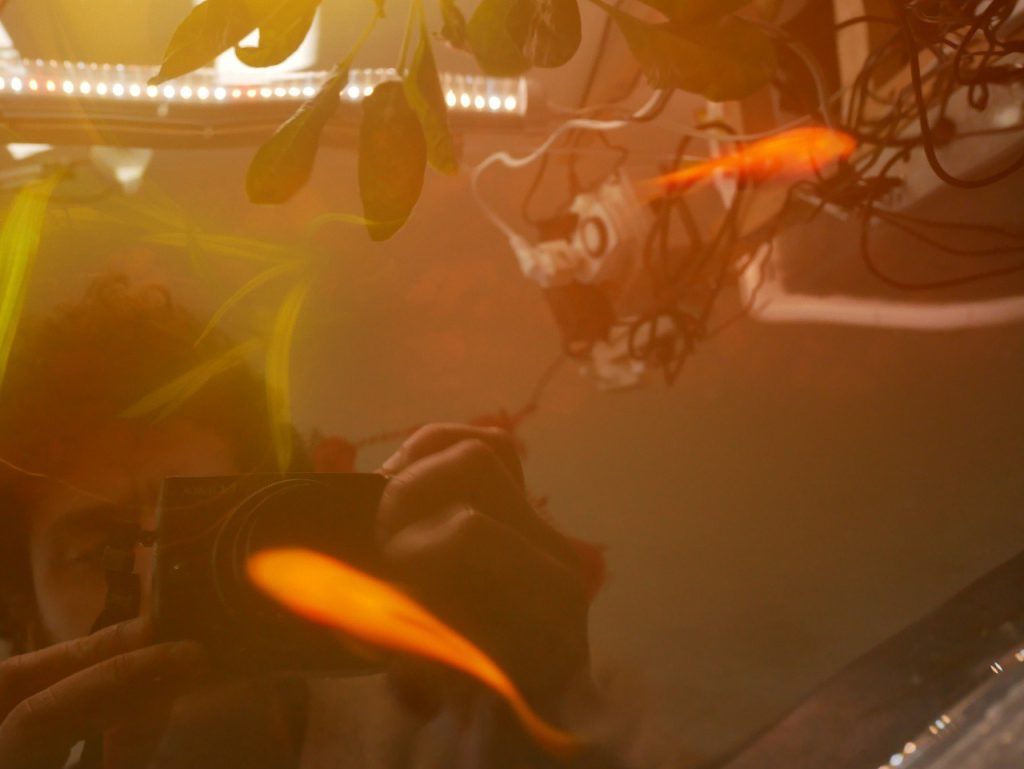
Students can directly experience the concepts learned in class by observing plant growth, fish behaviour, water chemistry and the physics of irrigation systems.
In this way, the aquaponics greenhouse gives students a deeper understanding of science in action and motivates them to learn more.
Teaching through an aquaponic greenhouse offers students the opportunity to learn science in a concrete and experiential way. In addition, the sustainable cultivation system offers many insights into the environmental challenges and innovative solutions that science can provide.
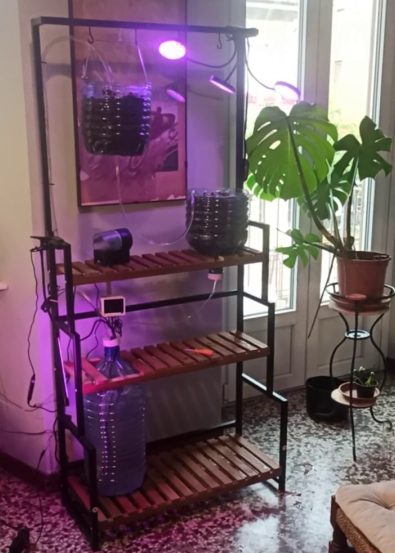
The Officine Innesto / Fablab For Kids team has developed an Educational Aquaponics Greenhouse project. The product is aimed at schools and private residences to spread awareness of the UN Sustainable Development Goals and the Ecological Transition of the ERDF Axis V of the Italian Ministry of Education.
In addition to bringing and disseminating an approach to aquaponics based on open-source tools, it promotes educational packages designed for primary and secondary schools, for ITS or university courses, for having a green corner at home, or a strange aquarium.