
The rapid advancement of technology has brought many benefits to society, including the development of the Internet of Things (IoT) devices and smart monitoring systems. These technologies have become increasingly important in addressing the needs of an aging Italian population.
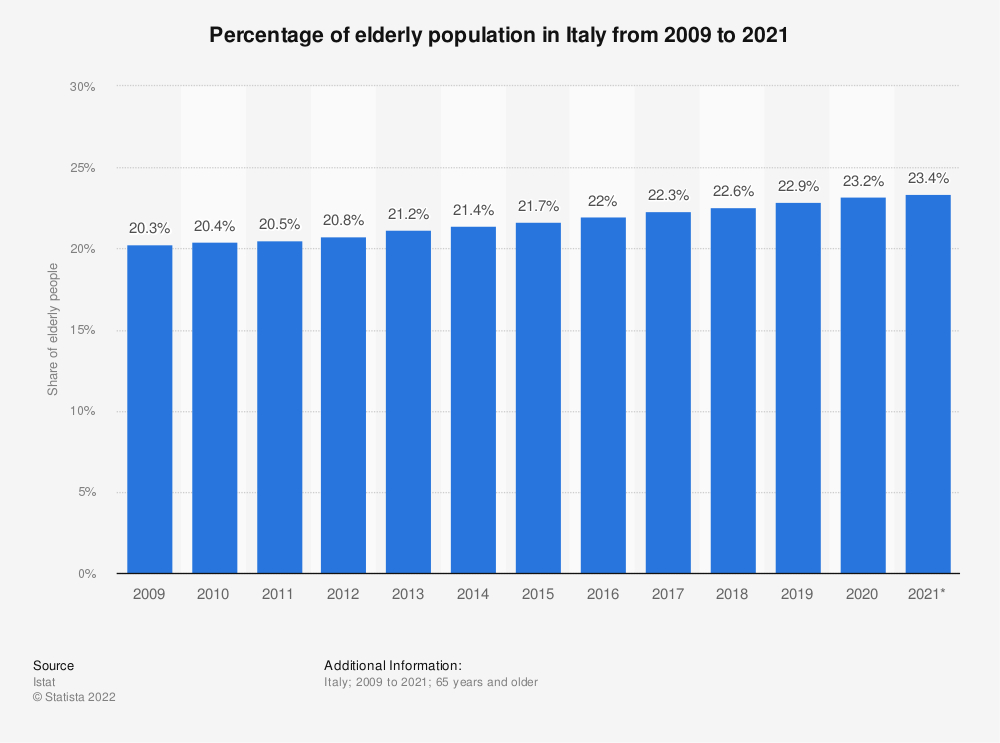
In 2019, Italy was the European country with the largest percentage of elderly population. Source
With the aging population growing at an unprecedented rate, the use of IoT devices and smart monitoring systems can help to address some of the challenges that come with this demographic shift. Officine Innesto explored the benefits of these technologies in dealing with the fast aging population within the years, trying to mend the concept of healing / retiring home with the domestic environment.
Firstly, IoT devices are an excellent tool for improving the quality of life of the elderly. For example, smart homes equipped with IoT devices can provide a range of services such as remote health monitoring, home automation, and home security. These devices can help seniors to live more independently by providing support and assistance when needed. Smart home devices can monitor the individual’s health and alert caregivers to any issues or changes that need to be addressed. For instance, if an elderly person has fallen, IoT sensors can detect the incident and automatically alert emergency services, providing prompt and timely assistance. Additionally, smart home devices can help the elderly to maintain their daily routines and schedules, which can improve their sense of autonomy and independence.
Secondly, smart monitoring systems can help to address the challenges associated with caring for the elderly. Caregivers can use smart monitoring systems to remotely monitor the health and wellbeing of seniors, reducing the need for frequent in-person check-ins. This can be especially beneficial for seniors who live alone or in remote areas where access to healthcare services is limited. For example, wearable devices can monitor vital signs such as heart rate, blood pressure, and oxygen levels. These devices can send data to caregivers or healthcare providers, allowing them to detect changes in health status and take appropriate actions.
Thirdly, IoT devices and smart monitoring systems can help to reduce healthcare costs associated with aging. By providing remote monitoring and care, these technologies can reduce the need for expensive in-person care, hospitalizations, and emergency room visits. For example, telehealth technologies can enable remote consultations with healthcare professionals, reducing the need for seniors to travel to clinics or hospitals. This can save time and money for both seniors and healthcare providers.
Casalab (2017), our first project
Casalab or Home for the Autonomies is a project we’ve been working together with Lombardy based Cooperativa Solidarietà e Servizi in 2017-18. The project reached a certain level of usability, allowing us a report on the Officine blog.
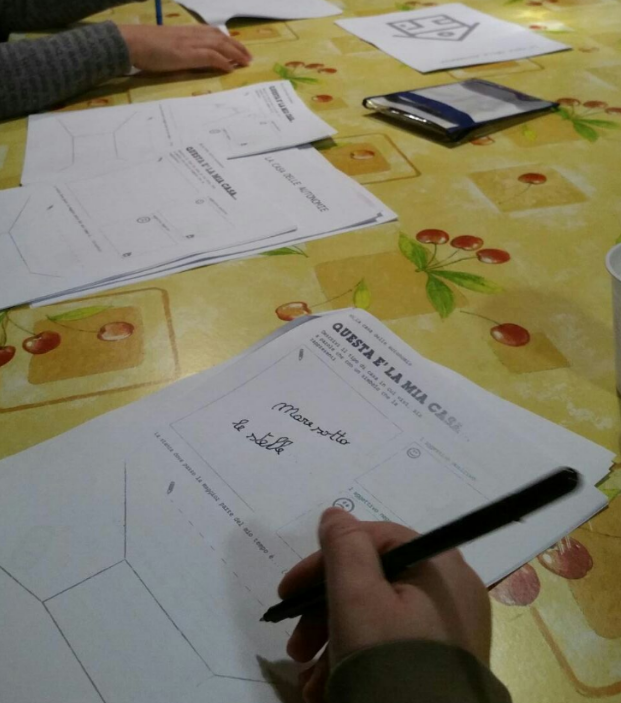
In order to better understand and identify things and processes to be monitored we managed to involve families, caregivers and users in a common storytelling, mapping good/bad habits, and theis relations with the space. We worked with Ilaria Scarpellini for this early reasearch sprint.
Social Cooperatives play a very important role in Italian Social and Health Care System, taking in care of a very large amount of people, with different casualties and problems: in our case we’ve been dealing with the mentally ill.
Discussing over the concept of “Home” was pivotal in this project. Both Laura and Tatiana (the two women that eventually went to live at Casalab) spent many years of their life living in social communities with other people. With several little technological interventions we were able to monitor few important things and let them live by themselves. Important to notice: the caregiver is still visiting them on a daily basis, while not sleeping in the house. Technology was meant to amplify rather than substitue his role.
As Giacomo Borghi reports in the video, “Home Automation is not replacing the caregiver, while becoming an active tool of knowledge”
The interventions in the home, negotiated with its users, were standard, and can be attributed to a wider concept of “monitored home”:
- Keyless access with card or code
- Environmental Monitoring (Noise, GAS, Temperature, Air Quality, TV use/abuse)
- Food Monitoring (Access / Time of fridge/freezer/food storage)
- Food Education web-app
Data is collected locally and sent to operators once a week. If the change of one or more of these variables trigger an “Event” the operator is notified in real time.
Casalab was the first time we customized Home Automation to meet Health Care needs. It’s been a big challenge and we hope to use and come back to this path soon.